






Fixed Income Unscripted: Challenging Consensus Thinking

Inflation remains above target and geopolitical tensions continue to shake supply chains. AI is transforming the investment landscape. Yet, markets seem remarkably comfortable with the global economic outlook.
In this edition of Fixed Income Unscripted, we asked our investors to weigh in on what markets might be missing. They shared their thoughts in a discussion ranging from consumer resilience to Fed policy and AI productivity gains, and where they see potential opportunities.
Q: WHERE ARE MARKETS TOO OPTIMISTIC?
While our investors focused on different risks, a strong consensus emerged that markets may be underestimating inflation risks, consumer vulnerabilities, geopolitical shocks and the timeline for the AI transformation to play out.
Inflation May Prove More Persistent Than Markets Expect
Markets may be pricing a relatively smooth disinflation path while underestimating structural forces that could keep inflation above pre-pandemic norms.
- Dilawer Farazi: “I think the stickiness of inflation is a little bit underestimated. It seems that most people expect some kind of resolution to the war in Iran and lower oil prices next year. But as we’ve seen, it’s a fluid situation, and the energy picture is constantly evolving. We’ve had a big commodity shock combined with supply-side disruptions. I think the path for inflation really depends on whether we get a proper resolution to the conflict and what that looks like for the Strait of Hormuz. Efforts to improve energy security, through infrastructure investment and diversifying energy supply, may also have a structural inflationary effect over the medium to long term.”
- Peter Yanulis: “Markets may not have fully repriced the possibility that inflation proves stickier, or more volatile, than expected. Across public credit, valuations appear to discount a fairly benign combination of resilient growth, continued disinflation and a patient Fed that can eventually resume cutting rates. That leaves a limited margin of safety if the next several inflation prints surprise to the upside. The change in Fed leadership adds another layer of uncertainty. If inflation expectations drift higher, the market may face the prospect of not only fewer cuts, but renewed tightening. For us, the key issue is whether credit investors are being compensated for a wider distribution of outcomes than spreads and yields currently imply.”
- Matt Eagan: “I think the market is too optimistic about inflation from a structural perspective. Investors seem to be clinging to the view that inflation will gradually revert back to the 2% target in the not-too-distant future. That view misses the key structural themes that have emerged over the past five to six years, like an aging population, a more constrained labor market, a massive structural fiscal deficit, and a greater-than-expected boom in AI and energy infrastructure spending. The AI story holds hope for investors that believe productivity gains can keep growth high with no inflation. But I think, if anything, the AI spending boom is blowing inflation into the system, and I expect it to be more volatile on a cyclical basis. I see the potential for unanchored inflation expectations to kind of swamp US Treasurys in terms of higher yields.”
Resilient Consumer Health, but Growing Stress Beneath the Surface
While spending data appears strong, there are signs of growing strain within both lower-income households and parts of the higher-income workforce.
- Rick Raczkowski: “I think there’s a lot of optimism in risk markets generally. The consumer has been very resilient, and we would agree with that view, but we see some headwinds worth considering. First, real disposable income is weakening, largely because wage increases are not keeping up with inflation. The savings rate is near historic lows, which means that consumers are drawing down their buffers.i We have seen a pickup in delinquencies in credit cards and auto loans, which has mostly been confined to lower-income consumers. In addition, consumer sentiment has been exceptionally weak—consumers report feeling gloomy about the outlook. Sentiment has not been a particularly reliable predictor of spending in recent years, but we don’t want to dismiss it outright. Our bias is to watch what consumers do, not what they say, but we think it’s possible for spending behavior to catch up with sentiment.”
- Pramila Agrawal: “Markets appear a bit optimistic about the consumer. While higher-end consumers appear fine, consumer-facing companies in sectors like food, beverage and retail are telling us that the lower-income consumer is stressed. We are seeing that in the measures Rick talked about. I think it’s something that may start to create some issues for markets.”
- Scott Service: “Consumer health is one spot where the market might be a little optimistic. The stock market, while sometimes volatile, continues to move higher. Retail sales numbers are doing very well. I think these factors mask the stress that the lower-end consumer is feeling right now. To put it into perspective, 60-day-plus delinquency rates for subprime auto loans are higher than they were in 2008, during the Great Financial Crisis.ii”
- Jennifer Thomas: “I’m seeing cracks in a specific set of high-income individuals. A large swath of high-income earners, primarily in the tech space, have only been able to replace a job loss if they accept a lower salary. For example, someone laid off in the AI tech space previously earning $400,000/year can find a new job, but at $200,000/year. These borrowers typically live in high cost-of-living areas, are high spenders and are less familiar with how to manage financial struggles. We’re starting to see the pressure come through in performance numbers in certain areas of personal consumer loans from high-income, high-FICO-score borrowers.”
AI Productivity Expectations May Be Ahead of Reality
AI could deliver meaningful productivity gains, but markets could be underestimating the time required for those benefits to emerge.
- Scott Service: “The AI productivity growth assumptions embedded in the market could be a little bit optimistic. We’re definitely believers in the long-term productivity benefits of AI, but we feel it will take time to get the return on investment that investors are looking for. It reminds me of the late 1990s and 2000s with the internet and fiber network buildout. Everyone was excited about how the internet was going to change everything. It did, but it took more than a decade to come to fruition. I think we’ll have a similar slower-than-expected rollout for AI productivity growth. I do think it will be life-changing, but it will take time to play out, and we are being very prudent in that space.”
External Shifts and Shocks May Not Be Fully Priced
Markets may be underappreciating the long-term impact of major geopolitical disturbances.
- Pramila Agrawal: “The market has really looked past disturbances like the tariff shock, the war in the Middle East, supply shocks and other geopolitical problems. And this is all happening with a backdrop of very large fiscal deficits and disruption of longstanding trade policies in almost all developed economies and many emerging economies. I think the balance of power and trade is changing, and we have not fully digested the impact that this will have on world economies.”
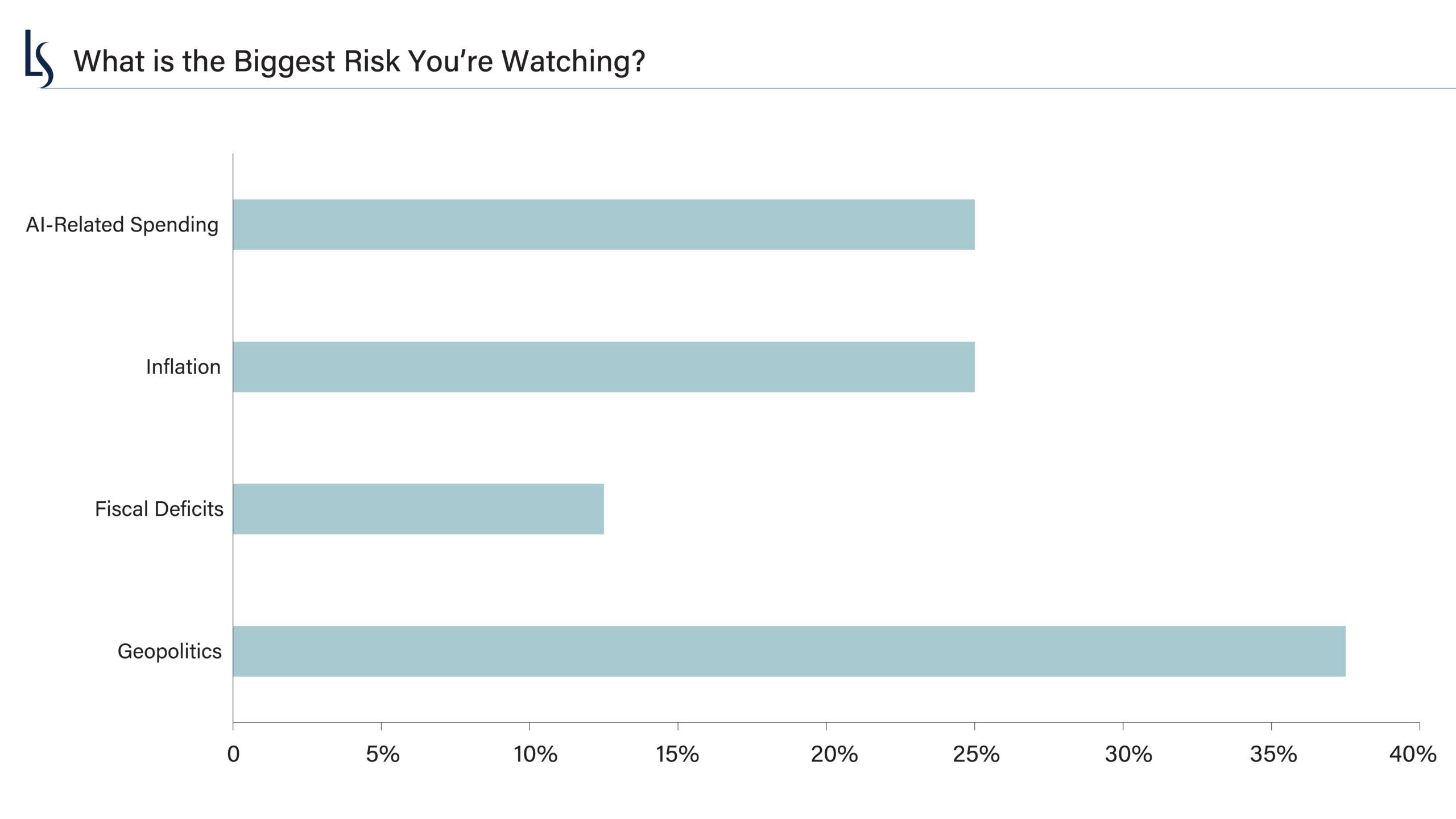
Source: Loomis Sayles survey of the featured investment professionals in this article. As of June 30, 2026.
Q: WHERE ARE MARKETS TOO PESSIMISTIC?
It’s hard to find much pessimism in today’s markets. That said, our investors think markets may be misjudging risks in public and private credit markets while overlooking AI-driven productivity gains and opportunities to collect carry.
Underestimating Income and Carry Opportunities
Some investors may be too focused on valuation concerns and not focused enough on the income available in today’s yield environment.
- Jennifer Thomas: “As an investor in securitized assets, I think people are underappreciating the role of carry in driving total return. Yes, spreads are tight, but don’t forget about the high carry with high income that securitized assets can offer (and typically with a discount relative to corporate bonds).”
- Scott Service: “As a global bond investor, I like to look for areas of value, where people might be a little pessimistic. A few local government bond markets look somewhat attractive to us, particularly Brazil and New Zealand. We think these markets have favorable risk/reward balances and attractive yields relative to underlying fundamentals.”
Underappreciating the Potential Long-Term Benefits of AI Outside of Technology
While markets focus heavily on AI-related risks, some of our managers see greater potential for productivity gains and economic benefits than current sentiment suggests.
- Matt Eagan: “I think some pockets of the market have been too pessimistic about AI’s effect on employment. AI will likely change the economy meaningfully, and some jobs and companies will become obsolete. But I’m an optimist. I think new businesses and occupations will emerge and job growth will continue. Many companies, including those that have been put in the “penalty box” over AI, can use AI to continue to grow, potentially creating new markets.”
- Pramila Agrawal: “I’ve noticed that when new AI technology is perceived to be disruptive to any sector, even mildly, the stocks in that sector tend to fall like dominoes. It seems the impact of AI on labor, productivity, and on companies in general is not fully understood yet. And I think some sectors are being penalized when they may actually do okay. On the other hand, some of the hyperscalers may not be able to monetize their technology as expected. It depends on where you look—you see exuberance in some places and pessimism in others.”
Public and Private Credit Misunderstandings
Investors may be making overly simplistic judgments about public versus private credit, creating opportunities for active managers.
- Pramila Agrawal: “I think one area where the markets are overly pessimistic is private credit. The stress has been concentrated in business development companies (BDCs) and their non-traded funds. That sector is a smaller portion of the private credit landscape and I don’t see systemic risk. In the private credit space, I think there’s a tendency to conflate liquidity risk with credit risk. Yes, private instruments are less liquid than public bonds, but that doesn’t mean that the underlying credit is weaker. There’s a lot of new participants in the private credit market that has to come to grips with the fact that it’s a less liquid sector. I think there will be some normalization as some of those participants exit and the buyer base stabilizes.”
- Peter Yanulis: “I think the market is underappreciating the relative value of liquid public credit versus parts of the private credit and leveraged loan markets. Investors have moved a significant amount of capital into private credit and floating-rate loans over the past several years in search of an illiquidity premium, but that premium is being tested. We are seeing stress emerge in areas with direct exposure to weaker middle-market borrowers, including software and private credit collateralized loan obligation (CLO) structures. By contrast, public emerging market debt offers daily liquidity, transparent pricing, and in many cases, stronger fundamental credit quality than some of these mid-market borrowers, yet many global investors remain underweight. We believe emerging markets debt is offering something rare right now—better liquidity than loans, better total return potential than investment grade bonds, and credit stories that are uncorrelated to domestic leveraged finance dynamics.”
The Path for Fed Policy May be More Manageable Than Feared
If inflation continues to moderate, rate-sensitive assets could benefit more than markets currently expect.
- Rick Raczkowski: “It’s hard to find much pessimism, but I think the markets may be a bit pessimistic about inflation and, by extension, interest rates. Now that tariff effects have faded, we expect less pressure on goods prices going forward. We’re also seeing signs of easing in housing and particularly in real-time rents. These things could support more moderation in inflation than the market expects. And because of that, we think the market may be too aggressive in pricing in near-term Fed interest rate hikes. We expect the Fed has the potential to stay on hold for longer than what’s currently priced into the markets.”
Few Areas of Genuine Pessimism
Widespread optimism itself may be the dominant market condition.
- Dilawer Farazi: “There’s not a whole lot of pessimism in the markets at the moment. In fact, I think there’s a lack of pessimism across many asset classes, reflecting generally strong risk appetite and rich valuations. We see generally tight corporate bond spreads and compressed equity risk premia despite a number of lingering macro headwinds that could upset the apple cart. Perhaps the lack of pessimism, in general, is what we need to be a little wary of.”
Q: WHAT OPPORTUNITIES EXCITE YOU MOST OVER THE NEXT SIX MONTHS?
Higher yields, selected emerging market opportunities, relative value in public credit and AI-driven investment trends have the potential to create a rich opportunity set for active fixed income investors.
Global Fixed Income and Carry Offer Consistent Opportunity
Today’s higher-rate environment can potentially provide compelling income opportunities across global fixed income markets.
- Scott Service: “Over the next six months or so we believe carry will be your friend. Underlying growth momentum is very positive. Corporate earnings have been stellar, especially in the US. Hyperscaler and AI capex are likely to have positive trickle-down effects on a number of other industries. Finally, we expect monetary policy to be somewhat supportive over the next six to 12 months or so. Brazil and New Zealand government bonds look very attractive to us from a carry perspective. We’ve been active in some securitized credit spaces, such as data centers and selected euro-pay floating-rate auto and personal loans. And even though spreads are tight, we’re comfortable with a small overweight to higher-quality corporate credit.”
- Jennifer Thomas: “We’re looking at global securitized markets. Their consumers are different, their regulatory environments are different, and so the opportunity set is a bit different compared to the US. Other areas that we like are more niche-y, like hard assets, infrastructure, fiber, small business and working capital. They’re small sectors that not everybody wants to play in because they require a lot of due diligence but can offer a lot of opportunity.”
- Rick Raczkowski: “Short- to intermediate-duration maturities are starting to look very attractive to us. That part of the curve has really come under pressure since the war with Iran began. And the short end was hit disproportionately as markets repriced Fed expectations after its June meeting. So, at current levels, we think short to intermediate duration can give you attractive carry and breakeven rates, while at the same time providing potential downside protection in a risk-off scenario.”
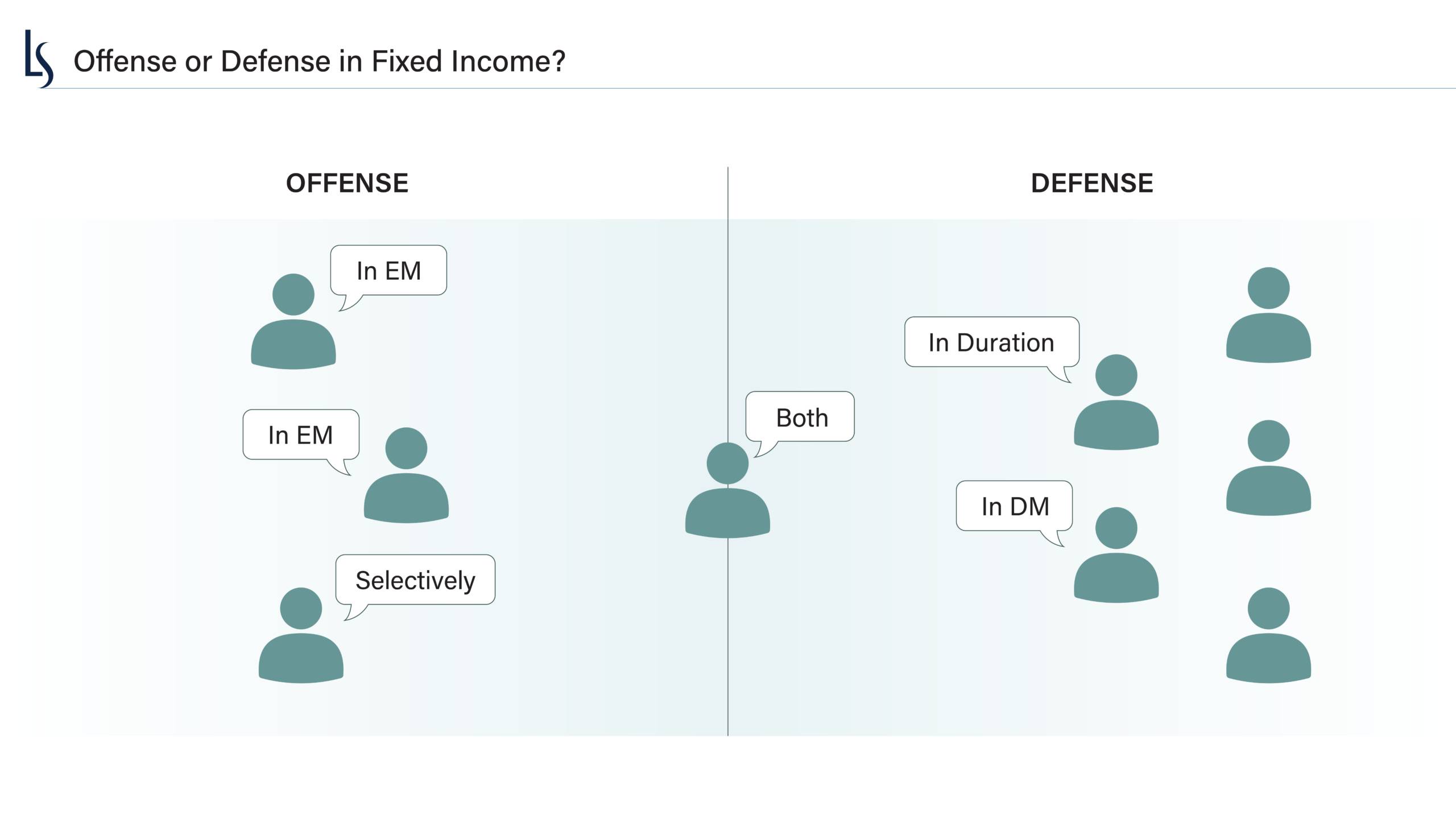
Source: Loomis Sayles survey of the featured investment professionals in this article. As of June 30, 2026.
Emerging Markets Remain Attractive
Despite lingering geopolitical and macro concerns, several participants are seeking out attractive risk-adjusted opportunities in emerging markets.
- Dilawer Farazi: “The credit metrics of EM high yield companies still remain extremely robust despite the exogenous shocks that we’ve seen over the last two years. On a macro level, even after the energy shock, the International Monetary Fund is forecasting EM growth greater than 3.8%, more than double the estimate for developed market (DM) growth at 1.7%. We think these strong underlying credit metrics, strong growth drivers and supportive supply technicals make EM high yield debt particularly interesting and compelling as an asset class, even if spreads over US high yield have come in a little bit from historic averages.”
- Peter Yanulis: “We’re still in the early innings of a broad EM recovery and re-rating story. In our view, the opportunity goes beyond attractive spreads relative to DM; many EM issuers now offer a combination of carry, improving fundamentals and daily liquidity. We think EM and securitized credit can each play a role in a global portfolio, and that EM debt offers a particularly compelling mix of income, favorable credit cycle dynamics and diversification when approached selectively. The strongest opportunities are likely to be idiosyncratic rather than beta-driven. Several cases in Latin America and Africa stand out to us where policy normalization, corporate deleveraging and improving external balances can support further spread compression.”
- Pramila Agrawal: “This is a time when corporates and governments are simultaneously investing in defense, food security, data, AI and more, creating a genuinely broad opportunity set. In fixed income specifically, we think EM debt looks interesting. EM local debt, sovereign and corporate credit are offering good spreads currently. We’ve seen very big structural shifts in how these markets are run and how the economies are doing, the fundamentals look good, and it’s an area we find very attractive.”
Public/Private Credit Convergence Broadens the Opportunity Set
The lines between public and private credit are blurring, opening a wider universe of investment opportunities and potential return drivers.
- Matt Eagan: “We’re most excited about the convergence of public and private credit. Private credit has matured and grown so that it generally mirrors the public markets in terms of the scope of sectors and security types, and certain private credit sectors now trade on the secondary market. In many cases, structure of a private credit offering can often provide greater protection than a public one. Meanwhile, we’re seeing transactions come together among “clubs” of investors, much like private transactions, and then settling in the public markets. We think this convergence opens up a broad area of return potential for investors who can do their due diligence.”
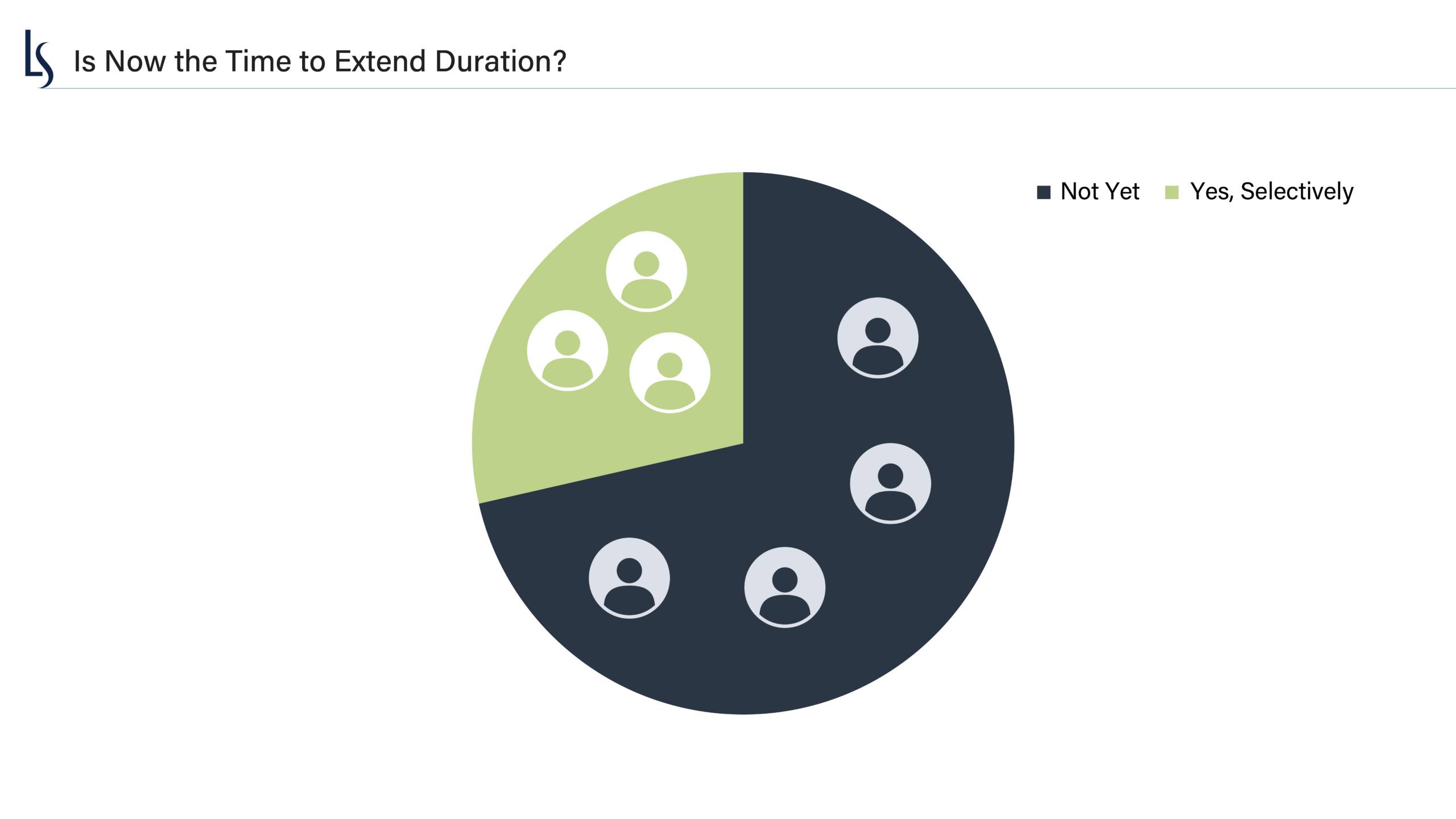
Source: Loomis Sayles survey of the featured investment professionals in this article. As of June 30, 2026.
Endnotes
i Source: Bureau of Economic Analysis, the personal savings rate was 3.0% as of June 25, 2026.
ii Source: Fitch Ratings, as of June 30, 2026.
Disclosure
Key Risks: Inflation Risk, Fixed Income Risk, Systemic Risk, Liquidity Risk, Credit Risk, Duration Risk.
This marketing communication is provided for informational purposes only and should not be construed as investment advice. Any opinions or forecasts contained herein, reflect the subjective judgments and assumptions of the authors only, and do not necessarily reflect the views of Loomis, Sayles & Company, L.P. Investment recommendations may be inconsistent with these opinions. There is no assurance that developments will transpire as forecasted and actual results will be different. Data and analysis does not represent the actual, or expected future performance of any investment product. Information, including that obtained from outside sources, is believed to be correct, but Loomis Sayles cannot guarantee its accuracy. This information is subject to change at any time without notice.
Markets are extremely fluid and change frequently.
9037388.1.1
Authors
